





How Can Multiparameter Monitoring Support Effluent Compliance in Food and Beverage Manufacturing?
Food and beverage manufacturing sites operate effluent treatment systems that must remain within discharge consent limits despite continual changes in production rate, raw material characteristics, and upstream process conditions. Maintaining consistent compliance under these conditions depends on understanding how the treatment process is performing at any given moment, rather than relying solely on retrospective data.
At one of the UK’s top malt producers, Boortmalt, online effluent monitoring was introduced as part of a wider mechanical upgrade to the site’s effluent treatment works. The focus of the upgrade was to provide continuous visibility of treatment performance across multiple stages of the process (aeration, secondary clarification, dissolved air flotation (DAF)), allowing operators to observe how conditions changed in real time rather than after laboratory results were available. Pi supported this installation in partnership with Aqua Operations, who manage the effluent treatment process on site.
Why is online monitoring used as the basis for operational effluent control?
Effluent quality at food and beverage sites can vary significantly as production inlet changes, raw materials vary, or cleaning operations take place. When process control is based primarily on laboratory analysis, any response to these changes is delayed. By the time results are available, conditions within the treatment system may have already changed.
Online monitoring provides continuous measurement of key parameters, allowing operators to see process trends as they develop and adjust operating conditions during normal operation. In practice, this means aeration rates, chemical dosing, and flow conditions can be altered in response to live data rather than historical snapshots.
How is dissolved oxygen used to control biological treatment performance?performance?
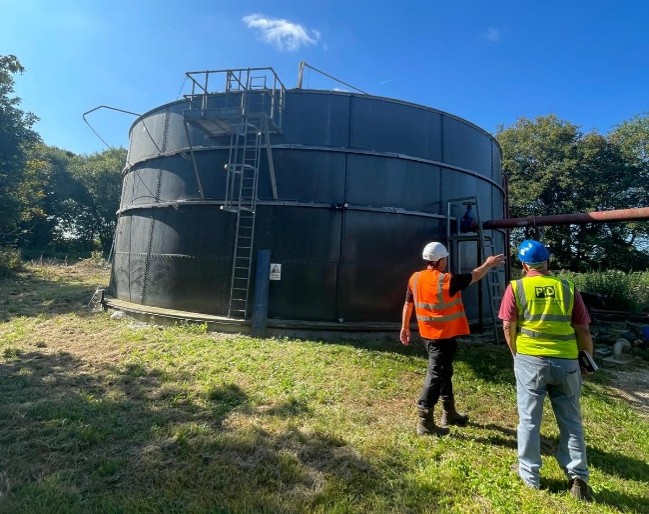
Within the biological stage of effluent treatment, dissolved oxygen acts as a primary control parameter in aeration tanks. Oxygen availability directly influences microbial activity and the breakdown of organic load. If dissolved oxygen levels fall too low, biological performance can be limited, leading to incomplete treatment. At the other extreme, excessive aeration increases energy consumption without delivering proportional treatment benefits.
To manage this balance, reliable dissolved oxygen measurement is essential. At this site, dissolved oxygen is monitored using Pi’s OxySense optical dissolved oxygen sensor installed in the aeration tank. OxySense uses an optical measurement principle designed to provide stable readings in abrasive and high‑fouling environments typical of industrial effluent applications. Automatic self‑cleaning and self‑verification reduce sensor drift and limit routine maintenance requirements. As a result, operators are able to adjust aeration rates using consistent dissolved oxygen data rather than compensating for intermittent lab results.
Why is suspended solids monitoring required through clarification stages?
Following biological treatment, secondary clarification is used to separate treated water from biological solids prior to final discharge. Changes in suspended solids levels at this stage often provide early indication of settling issues, hydraulic loading, or changes in upstream biological performance. If these changes are not identified promptly, solids carryover can affect downstream processes and compromise discharge quality, potentially leading to significant fines from the License to Discharge body.
To maintain visibility across a wide range of operating conditions, suspended solids measurement must remain stable at both low and high concentrations. At this site, suspended solids are monitored using Pi’s SoliSense® suspended solids sensor, which measures from low NTU values through to 8% solids. This wide operating range allows consistent monitoring even as process conditions fluctuate. When fitted with an automatic cleaning system using water or air, SoliSense® maintains stable optical measurement in fouling environments and reduces manual intervention.
How is solids removal verified at the DAF outlet?
As a final solids removal stage, dissolved air flotation is used to capture remaining suspended material before discharge. Monitoring at the DAF outlet plays an important role in confirming flotation performance and verifying that chemical dosing and hydraulic conditions remain correctly balanced.
A SoliSense® sensor installed at the DAF outlet provides continuous suspended solids measurement at this critical point. This allows operators to identify process upsets as they occur and confirm that solids removal remains effective before final discharge.
How does multiparameter monitoring improve understanding of the overall treatment process?
By combining dissolved oxygen and suspended solids monitoring across multiple stages of treatment, operators gain a more complete view of how the effluent treatment process behaves as a system rather than as a series of isolated units. Viewing data from aeration, clarification, and polishing stages together makes it easier to understand cause‑and‑effect relationships and assess the impact of operational changes.
At this site, continuous multiparameter monitoring now provides real‑time visibility at key treatment stages. Operators use this data to regulate aeration, chemical dosing, and flow conditions as part of routine operation, supporting consistent compliance with discharge consent limits while maintaining stable treatment performance.
If your site is reviewing effluent monitoring as part of a compliance upgrade or process improvement programme, Pi can support the assessment and selection of monitoring solutions based on real‑world treatment process experience.
Related Posts
May 18, 2026
Why Are PLCs Becoming a Problem for Some Chemical Dosing Systems?
Why Are PLCs Becoming a Problem for Some Chemical Dosing Systems? PLCs are everywhere, and…
May 11, 2026
Renal Dialysis Water Quality Monitoring in UK Healthcare Facilities
Renal Dialysis Water Quality Monitoring in UK Healthcare Facilities Renal dialysis water treatment systems are…
March 11, 2026
What Is Chemical Oxygen Demand (COD) and Can UV254 Be Used to Measure It in Wastewater?
What Is Chemical Oxygen Demand (COD) and Can UV254 Be Used to Measure It in…

January 26, 2026
Why Do Leading Beverage Manufacturers Use Turbidity Analysers to Monitor Water Quality?
Why Do Leading Beverage Manufacturers Use Turbidity Analysers to Monitor Water Quality? Pi has continued…