





What Is Chemical Oxygen Demand (COD) and Can UV254 Be Used to Measure It in Wastewater?
What is chemical oxygen demand and why is it measured?
Chemical oxygen demand (COD) is a measure of the amount of oxygen that is available to oxidise the organics present in a body water. COD can be used as a measure of how polluting an effluent can be to the natural environment. When an effluent with high COD is discharged, there is a reduction in the dissolved oxygen in the surrounding environment, which can cause harm to the local biome and biota. As authorities tighten environmental compliance standards, COD is measured to ensure the effluent discharge does not harm local ecosystems.
How is COD measured in wastewater?
There are many methods that can be used to measure COD in wastewater such as colorimetry using dichromate reagents, closed reflux reactions, and measuring organics’ digestion time. The main issues that operators face when using these methods is the complexity, cost, and ultimately the inability to measure COD in real time.
Can UV254 be used to estimate or replace COD?
A simpler and cheaper way to measure COD is using a surrogate measurement, such as UV254.
What is the relationship/correlation between UV254 and COD?
Absorbance at a specific wavelength is directly related to the concentration of organic compounds in water that absorb light at that wavelength. Light at 254 nm is of particular interest because many organic compounds readily absorb UV light at this wavelength. Since UV254 absorbance is proportional to the concentration of organics present, a linear relationship between UV254 and COD can be established. This allows UV254 to be used as a surrogate measurement for COD, providing the type of organics (absorbance) don’t change too much.
It is important to note that it is possible for there to be no correlation between UV254 absorbance and other water quality parameters if that parameter on a particular water source does not contain UV254 absorbing substances. An example of this would be a water supply counting a lot of dissolved sugar, as sugar won’t absorb UV254 but will have a high COD.
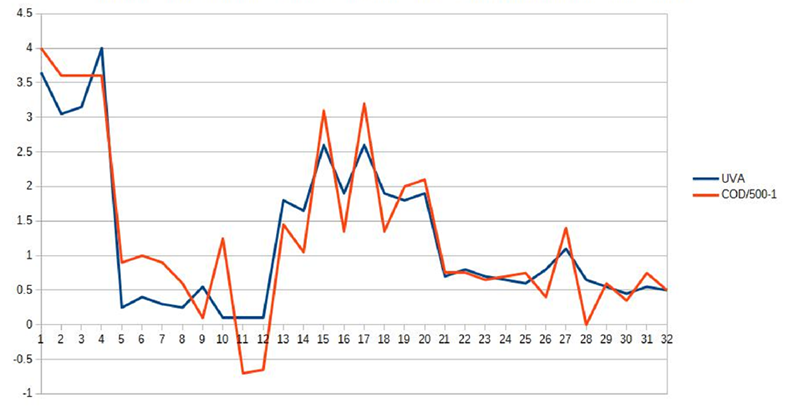
Above is the data from a correlation study between COD and UV254 absorbance taken from industrial wastewater samples. This shows a visual example of the relationship between COD and UV254 absorbance.
How does a UV254 COD sensor work?
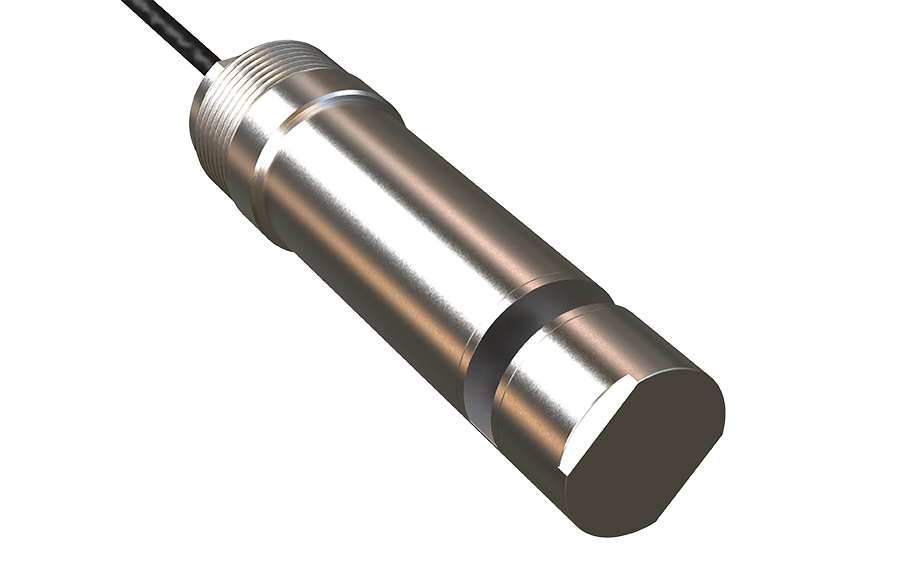
The UV254Sense probe from Pi used a high quality, long life 254nm wavelength UV LED source. It shines this light through a sapphire window, and the water sample picks up the light at the other side at the photodiode detector. The amount of light that is ‘lost’ to the absorbance is known as ‘UVA’. As mentioned above, the absorbance is the value of interest, so the UVA is used to determine the correlation factor and generate a surrogate measurement for COD.
UV254 COD correlation example (wastewater / water)
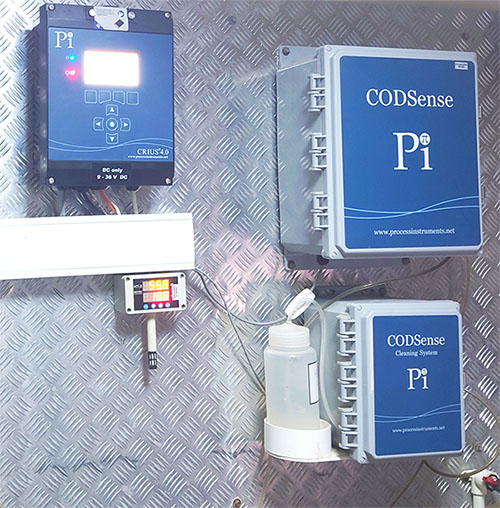
Pi’s service engineers recently upgraded a UV254 COD monitoring system at a wastewater treatment works in Turkey. This WTW has been using Pi’s UV254 COD monitoring system to ensure that their effluent discharge to a nearby river stays below the 5mg/l legal limit. The system has been in place and working seamlessly for over 6 years.
What is a ‘good’ UV254 probe?
Pi’s new UV254Sense probe is superior to other UV probes on the market as it is simple to own because it has no moving parts and is relatively cheap to run as it uses no reagents.
To learn more about how UV254 can be used as a surrogate for other measurements such as total organic carbon (TOC) and biological oxygen demand (BOD), click here. To explore how UV254 monitoring can be applied to your specific wastewater or process conditions, click here to get in touch with our experts.
Related Posts
July 13, 2026
What Problems Do Self-Cleaning Sensors Solve in Water Treatment?
What Problems Do Self-Cleaning Sensors Solve in Water Treatment? In short, self-cleaning sensors solve three…
June 12, 2026
How Can Multiparameter Monitoring Support Effluent Compliance in Food and Beverage Manufacturing?
How Can Multiparameter Monitoring Support Effluent Compliance in Food and Beverage Manufacturing? Food and beverage…
May 18, 2026
Why Are PLCs Becoming a Problem for Some Chemical Dosing Systems?
Why Are PLCs Becoming a Problem for Some Chemical Dosing Systems? PLCs are everywhere, and…
May 11, 2026
Renal Dialysis Water Quality Monitoring in UK Healthcare Facilities
Renal Dialysis Water Quality Monitoring in UK Healthcare Facilities Renal dialysis water treatment systems are…