





Renal Dialysis Water Quality Monitoring in UK Healthcare Facilities
Renal dialysis water treatment systems are designed to produce high‑purity water for use in haemodialysis, where treated water comes into contact with a patient’s bloodstream through a semi‑permeable membrane. Because patients are exposed to large volumes of water during treatment, water quality monitoring forms an essential part of system operation.
In the UK, dialysis water treatment plants typically have multiple treatment stages, including filtration, carbon adsorption and reverse osmosis. Monitoring is used to verify that these stages are operating correctly and that the water quality remains suitable for dialysis use.
Pi has supported UK hospital installations by supplying and installing instrumentation used to verify treated water quality before it is delivered to dialysis equipment.
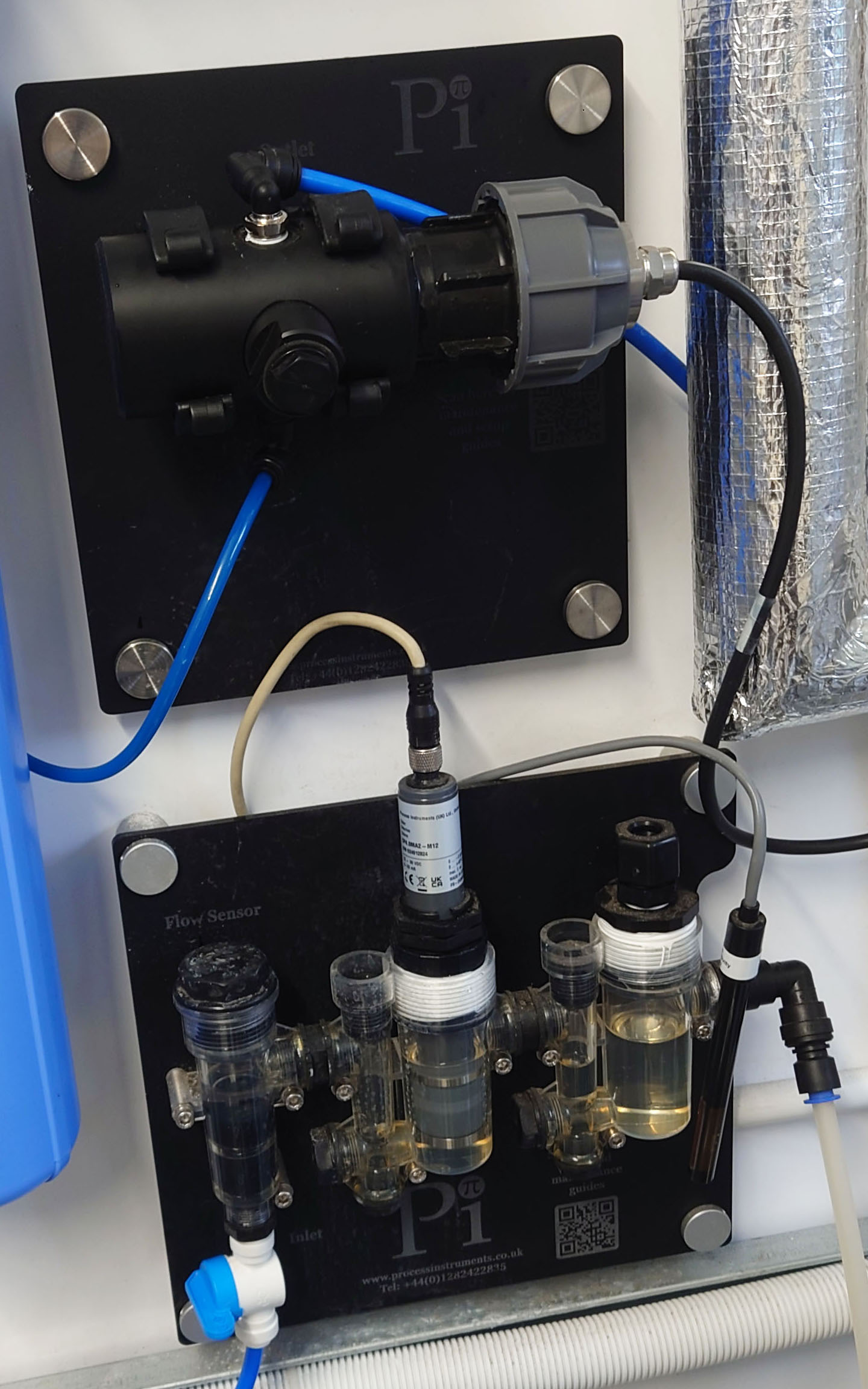
Which water quality parameters are commonly monitored in dialysis water systems?
Dialysis water systems are monitored to confirm both the removal of unwanted contaminants and the ongoing integrity of the treatment process. Parameters commonly monitored include chlorine, nitrate and conductivity, each providing different information about system performance.
Together, these measurements are used to confirm that disinfectants have been removed, dissolved contaminants remain controlled, and treatment stages such as reverse osmosis are operating as intended.
Why is chlorine monitoring critical in dialysis water treatment?
Municipal drinking water supplies are typically disinfected using chlorine or chloramine. These disinfectants must be removed before water is used for haemodialysis.
If chlorine or chloramine passes through the treatment system, it can damage dialysis membranes and cause haemolysis, leading to serious patient harm. For this reason, chlorine monitoring is used downstream of carbon filtration to verify effective disinfectant removal.
In this application, Pi’s HaloSense chlorine analyser is used to measure residual chlorine. The sensor is designed to provide stable chlorine measurement with reduced sensitivity to pH variation, helping ensure that changes in chlorine concentration are detected reliably during operation.
What role does nitrate monitoring play in dialysis water quality control?
Nitrate can be present in source water or appear as a result of changes in treatment performance. Because dialysis involves prolonged exposure to treated water, nitrate levels are monitored to confirm that treatment processes continue to remove dissolved contaminants effectively.
Monitoring nitrate provides additional assurance that stages such as reverse osmosis are performing as expected and that dissolved impurities are not passing through to the dialysis system.
At this site, nitrate measurement is carried out using Pi’s NitraSense analyser, providing verification of nitrate levels within the treated water stream.
What does conductivity monitoring indicate in dialysis water systems?
Conductivity measurement is widely used in dialysis water treatment as sudden changes in conductivity can indicate issues such as membrane failure, incorrect system operation, or filter breakthrough within the treatment process.
Pi’s ConductiSense conductivity sensor is used to monitor treated water conductivity. The sensor is designed for continuous operation in high‑purity water, where fouling or corrosion can affect measurement reliability. Maintaining stable conductivity measurement allows operators to identify changes in system performance promptly.
What are the risks of relying only on periodic testing?
Where monitoring relies primarily on periodic sampling and laboratory analysis, changes in water quality may go undetected between tests. In dialysis applications, this creates a risk that disinfectants, dissolved contaminants or inadequately treated water could reach dialysis equipment.
By monitoring chlorine, nitrate and conductivity continuously, operators can identify deviations in treatment performance and respond before the water reaches the dialysis equipment.
How does monitoring support patient safety in dialysis applications?
In renal dialysis, water quality monitoring is not simply a process control function but a fundamental aspect of patient safety. Measurement data is used to verify correct operation of the treatment system and provide confidence that treated water quality remains consistent during use.
If you are reviewing dialysis water monitoring practices or assessing improvements to an existing system, Pi can support application assessment and instrumentation selection based on healthcare water treatment requirements.
Related Posts
July 13, 2026
What Problems Do Self-Cleaning Sensors Solve in Water Treatment?
What Problems Do Self-Cleaning Sensors Solve in Water Treatment? In short, self-cleaning sensors solve three…
June 12, 2026
How Can Multiparameter Monitoring Support Effluent Compliance in Food and Beverage Manufacturing?
How Can Multiparameter Monitoring Support Effluent Compliance in Food and Beverage Manufacturing? Food and beverage…
May 18, 2026
Why Are PLCs Becoming a Problem for Some Chemical Dosing Systems?
Why Are PLCs Becoming a Problem for Some Chemical Dosing Systems? PLCs are everywhere, and…
March 11, 2026
What Is Chemical Oxygen Demand (COD) and Can UV254 Be Used to Measure It in Wastewater?
What Is Chemical Oxygen Demand (COD) and Can UV254 Be Used to Measure It in…